
In an era marked by uncertainty and geopolitical turbulence across the Middle East and the broader Muslim world, a message that has recently drawn significant attention comes from Aisha Gaddafi, the daughter of former Libyan leader Muammar Gaddafi, who is now living in exile in Oman.
Her message to the people of Iran calls for deep reflection, not only on Libya’s own history, but also on the current circumstances facing Iran, other Muslim nations, and their relationships with external powers.
From a Heart That Witnessed Collapse
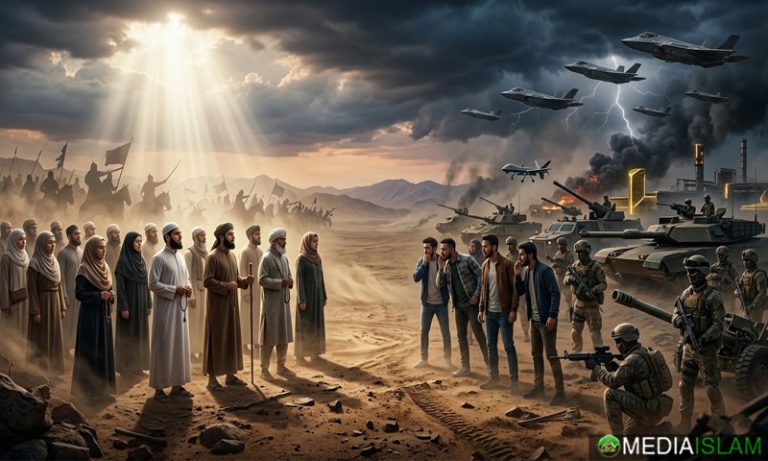
In her message, Aisha Gaddafi presents herself as a voice shaped by direct experience, someone who witnessed the consequences of Libya’s tragedy, not only during armed conflict, but in the aftermath of being ensnared by what she describes as false promises and deceptive hopes offered by Western powers.
According to her, assurances that peace and international acceptance could be achieved through strategic concessions ultimately led to NATO’s military intervention, which dismantled the state’s institutions and forced its people into poverty, displacement, and devastation.
Aisha recounts that her father, Muammar Gaddafi, was once told that if Libya abandoned its nuclear and missile programs, “the doors of the world would open” to the country.
The reality, however, proved starkly different when NATO airstrikes left Libya in ruins, an event with long-lasting and complex geopolitical implications for national security and sovereignty.
A Warning to the Iranian People: A Letter from History
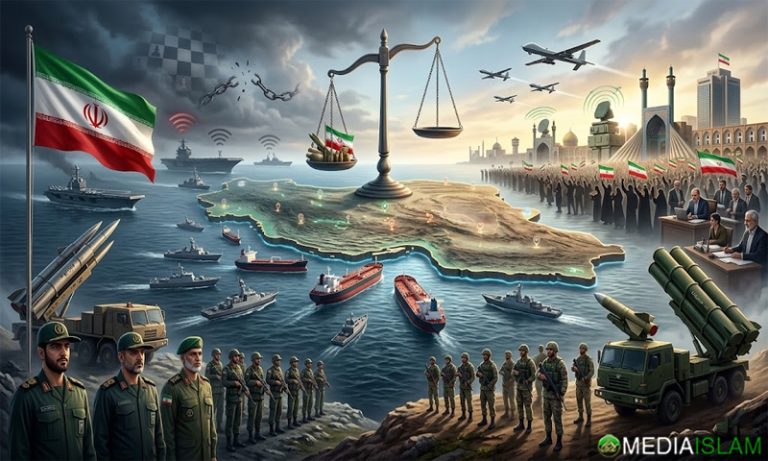
Aisha Gaddafi directs this message specifically to the people of Iran, portraying them as a resilient, principled, and dignified nation.
She notes that Iranians have long demonstrated extraordinary endurance in the face of sustained political, economic, and diplomatic pressure, including international sanctions, media campaigns aimed at demonization, and what she describes as a systematic and orchestrated “economic war.”
In her message, she urges the Iranian people not to be ensnared by the same promises of compromise that once tempted the Libyan regime.
According to her, making concessions to adversaries only invites further destruction, fragile unity, and prolonged social suffering.
She employs a powerful metaphor, likening negotiations with dominant external powers, without a clear understanding of the balance of power, to granting a wolf time to plan its next attack.
Lessons from History: Cuba, Venezuela, North Korea, and Palestine
In a broader context, Aisha compares Iran to several other entities she describes as having “stood firm against external pressure,” including Cuba, Venezuela, North Korea, and the Palestinian struggle.
She asserts that history tends to remember those who remain steadfast with honor, while those who surrender or over-compromise are often reduced to obscurity.
Although these cases differ significantly in ideology and geopolitical circumstances, her core message is a call for steadfastness, dignity, and courage in defending national sovereignty.
Geopolitical Implications in the Present Era
This message emerges at a time when relations between major Muslim countries and external powers, such as the United States, NATO, and other Western nations, continue to be tested by complex conflict dynamics, including tensions between Iran and Israel and sustained diplomatic pressure on states that resist external dominance.
Aisha Gaddafi highlights how Libya’s experience, particularly the fall of the Gaddafi government following the Arab Spring and Western intervention, is now viewed as a cautionary tale for countries like Iran, warning against repeating similar strategic mistakes.
Her message also touches on broader themes of national sovereignty, the cost of compromise, and the nature of great-power relations—issues that remain central to the geopolitical trajectory of the Muslim world today.
Influence and Criticism
While messages of this nature attract attention and generate diverse reactions across social media and online discussion platforms, they must also be interpreted within a broader historical framework and contemporary political realities.
Iran’s population faces unique challenges stemming from its internal political structure, international pressures, and complex regional relationships, including the ongoing conflict in Palestine and tensions with Israel.
Within this context, Aisha Gaddafi’s perspective should be read as the viewpoint of someone shaped by Libya’s historical experience, rather than as a definitive representation of Iran’s multifaceted political reality.
Conclusion
Aisha Gaddafi’s message to the people of Iran, as circulated through social media and alternative news platforms, is a call rooted in personal history and expansive geopolitical reflection. It conveys deep disillusionment with the promises of external powers and delivers a stark warning against repeating historical mistakes that led to tragic consequences for a nation and its people.
While each country’s circumstances differ, the message sparks renewed discussion on sovereignty, strategic compromise, and international politics in the modern era.
“Aisha Gaddafi is the daughter of Colonel Gaddafi and currently lives in exile in Oman. She has delivered the above message to the people of Iran, one that is worth reading and understanding in today’s context.“
About the Author